

More Than Words: How Speech Therapists at SPD Support Communication Through AAC

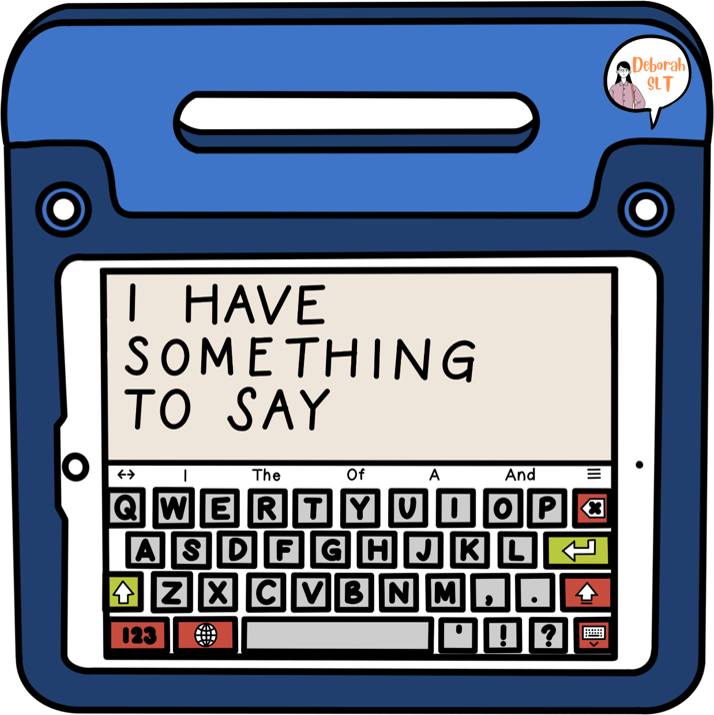
Communication support takes many forms – and for some individuals, Augmentative and Alternative Communication (AAC) can play an important role in helping them express themselves, connect with others, and participate more meaningfully in everyday life.
AAC refers to tools and strategies that support communication for individuals who experience difficulties with speech. These can range from low-tech options such as communication boards to high-tech speech-generating applications.
At SPD, AAC may be incorporated with ongoing speech therapy provided to persons with disabilities of different ages and abilities.
Behind this work is a team of speech and language therapists (SLTs) who support communication across services and settings—from a specialised centre, early intervention to schools, rehabilitation and senior care, day activity centres, community-based programmes, workplaces and home environments.
Meet The People Behind the Voices

Joey works closely with educators, caregivers and allied health professionals to support children’s communication and participation at SPD’s Early Intervention Programme for Infants and Children (EIPIC).
“...communication is so much more than an exchange or transaction - it’s about building relationships, discovering who others are, and sharing joyful, meaningful moments together.” - Joey

Aaron works at SPD’s Specialised Assistive Technology Centre (Specialised ATC), focusing on AAC and assistive technology. Over the past four years, he has supported children with developmental and communication needs, as well as adults with physical challenges and degenerative motor conditions. Alongside direct client support, he also trains students, professionals and caregivers in the use of assistive technology.

Tanushree has been with SPD for six years, rotating to different programmes and services under the SPD Therapy Hub. She has worked with clients of different ages and abilities, from preschoolers with communication difficulties to students in special education settings.

Yvonne supports individuals with speech, language and swallowing difficulties at SPD’s Senior Care Centres. She also helps younger clients with acquired disabilities return to work or school through SPD Rehabilitation Services.
Regardless of the setting and clientele they work with, the team shares a common belief: everyone deserves the opportunity to communicate meaningfully.
Going Beyond Words: Memorable Moments
Ask any of these SLTs about memorable moments and many of their stories show that communication is about much more than just getting needs met. AAC can help individuals express emotions, personality and connection.
For Tanushree, one memorable moment came during a lesson on emotions with a student with autism spectrum disorder (ASD) in a special education classroom. After months of support in using AAC to initiate communication and express feelings, the student independently typed on his AAC device to share how happy he felt about an upcoming event, and even explained how he wanted to regulate himself.
The moment surprised both classmates and teachers.
“We had been supporting him for several months, intentionally building his skills in initiating communication using AAC, expressing his emotions, and identifying strategies for self-regulation,” Tanushree explained.
“We always believed he had the ability, and this experience was important because it helped the school staff see that presuming competence and explicitly teaching AAC skills are equally important. This event marked the beginning of much richer communication throughout the classroom.”
Similarly, Aaron recalled working with a child with ASD who had significant communication challenges. Through modelling and presumed competence, the child independently used a high-tech AAC application to express “I like it” after receiving a snack.
While simple, the moment was meaningful, and represented months of work and effort from the child and team. Aaron shared that communication for many children with higher needs is often centred on requesting, making moments of self-expression especially important.
In the field of adult rehabilitation, AAC opened new possibilities for one of Yvonne’s clients with moderate-to-severe ataxic dysarthria, a motor speech disorder wherein a person has difficulty with coordination, strength and control of their articulators. Using a low-tech eye-gaze communication board and alphabet chart, the client gradually learned to spell messages using eye movements.
Today, he is able to make requests, answer questions and comment both during therapy sessions and at home — something Yvonne describes as deeply rewarding to witness.
Sometimes, however, the most memorable moments are the unexpected ones.
Joey fondly recalled a child who tapped her shoulder before using her AAC device to say: “Teacher Joey, I want to eat bugs.”
“It was so out of the blue and unrelated to anything that was going on in that moment that I couldn't help but laugh,” Joey recalled. “She was really pleased by my reaction and went on to tell me all the other things she wanted to ‘eat’. I played along by telling her that I wanted to eat her toy bus, which made her laugh even harder.
“In that moment, we were having a genuine back-and-forth interaction that was fun and meaningful for both of us, even when the actual content of our messages were anything but meaningful.”
The moment was a reminder that AAC users, like anyone else, deserve the freedom to say silly, spontaneous and joyful things. After all, communication is not only about saying functional or useful things; it is also about connecting, playing and sharing meaningful moments together.
This article is Part 1 of our two-part feature on SPD’s speech-language therapists! Stay tuned to read Part 2, coming in August 2026.


Comments